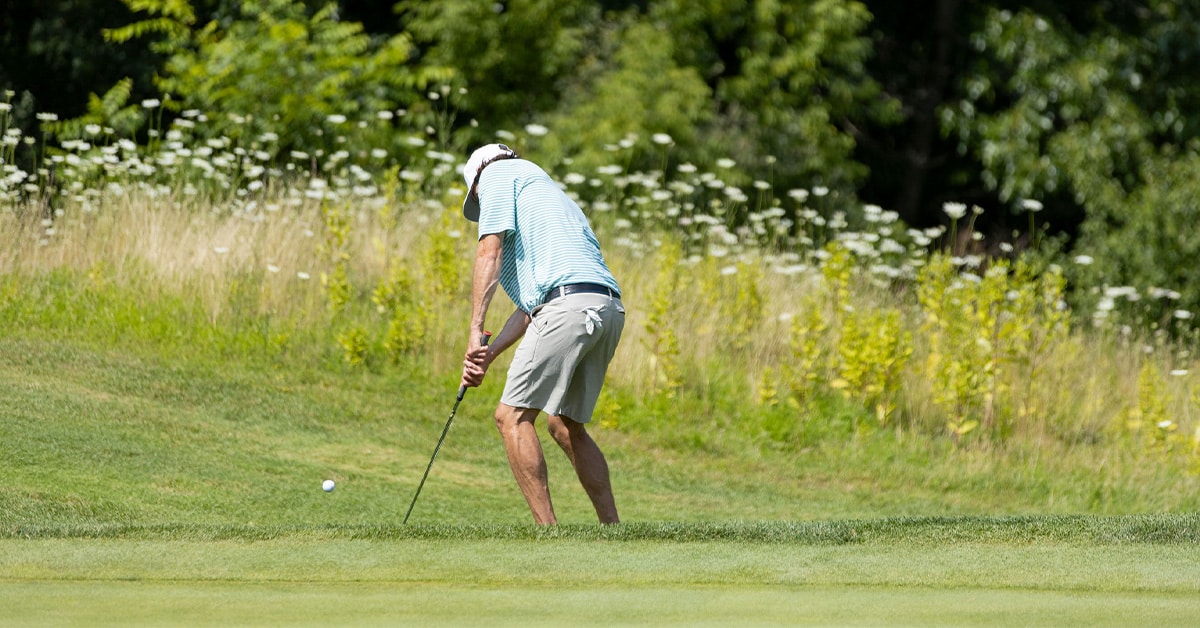
As members of a prestigious country club, we not only share a love for the game of golf but also a responsibility to care for the course that brings us together. A well-maintained golf course doesn’t just happen; it’s the product of diligent maintenance from the grounds crew and respectful habits from players. Here’s how you can do your part to preserve the pristine condition of our course and ensure a top-tier experience for all.
1. Repairing Divots: Why Sand Matters
When you take a shot from the fairway, it’s common to take a divot—a small piece of turf that is dislodged. Leaving it unrepaired can lead to poor lies for others, promote weed growth, and create uneven playing conditions.
What to do: Use the sand and seed mix provided on your cart or tee boxes to fill the divot. Fill the hole level with the ground and gently smooth it with your foot or club.
Why sand and seed? The sand fills the void to create a smooth surface, and the seed helps regenerate the turf. Just replacing the turf chunk is less effective; it often dies and leaves an unsightly scar.
2. Fixing Ball Marks the Right Way
Ball marks, those little craters on the green made by high, soft landings, are small, but they can seriously impact putting surfaces.
How to repair: Use a ball mark repair tool or a tee. Insert it at the edge of the mark and gently push the surrounding turf inward, toward the center. Avoid prying upward—this damages the roots. Gently tap the repaired area with your putter to smooth it.
Why it matters: Unrepaired ball marks can take weeks to heal, leaving brown spots and bumpy surfaces that affect play.
3. Golf Cart Etiquette: Know Where to Drive
Golf carts are a convenience, but without proper etiquette, they can cause lasting damage to turf, roots, and irrigation.
Do:
- Use cart paths wherever possible, especially around tees and greens.
- Follow the 90-degree rule when it’s in effect: drive straight out to your ball from the path, then return.
- Obey all signage and roped-off areas.
Don’t:
- Drive within 30 feet of greens, tees, or bunkers; these areas are the most sensitive.
- Take shortcuts across fairways when it’s wet or muddy.
- Drive in the same tracks over and over—this compacts the soil and wears down grass.
- Drive on the edge of the cart path, keep all four wheels of the cart on the path to avoid burning out the grass on the edges of the path.
4. Rake Bunkers Like a Pro
We’ve all found ourselves in the sand, but it’s important to leave the bunker in better shape than we found it.
- Use the rake provided to smooth out any footprints or club marks.
- Start from the middle and rake your way out, exiting at the low point.
- Leave the rake inside the bunker and parallel to the direction of play at RedWater Golf Clubs.
5. Treat the Course Like Your Home
Our course is more than just a playing field; it’s a shared space that reflects the standards and pride of our club.
- Replace or repair anything you disturb.
- Dispose of trash, broken tees, sunflower seeds, and cigar/cigarette butts properly.
- Be mindful of the pace of play while still taking the time to care for the course.
Golf is a game of honor, and that spirit extends beyond scoring and sportsmanship. By repairing divots, fixing ball marks, respecting cart rules, and treating every inch of the course with care, we ensure a great experience for everyone today and for generations of golfers to come.
At RedWater Golf, we have come up with a concept called “Guard The Grounds”. No matter which RedWater Club you call home, we ask that you take the time, on your assigned hole, to repair more than just your own mark. You can refer to the chart below to find the first letter of your last name to determine your hole assignment. Let’s keep our courses beautiful. After all, we’re not just playing here, we’re preserving a legacy.
| #1 – A | G | N | #7 – B | #13 – V |
| #2 – K | U | #8 – C | #14 – S |
| #3 – S | #9 – L | F | #15 – M |
| #4 – M | #10 – T | Y | Z | #16 – L | F |
| #5 – D | I | X | #11 – E | O | J | #17 – B |
| #6 – W | #12 – P | Q | R | #18 – H |